Craster
A Clash of KingsCraster is a wildling leader living beyond the Wall whose keep becomes one of the Night’s Watch’s few refuges during the ranging. His importance lies in the contradiction at the center of that refuge: he receives the black brothers by the fire and offers them counsel, yet preserves his household by giving newborn boys to the cold gods, the white shadows of the night. To Jon Snow, Craster is at once a possible ally, a source of knowledge, and a man whose survival rests on an atrocity the Watch knows about but does not stop.
A Host Beyond the Wall
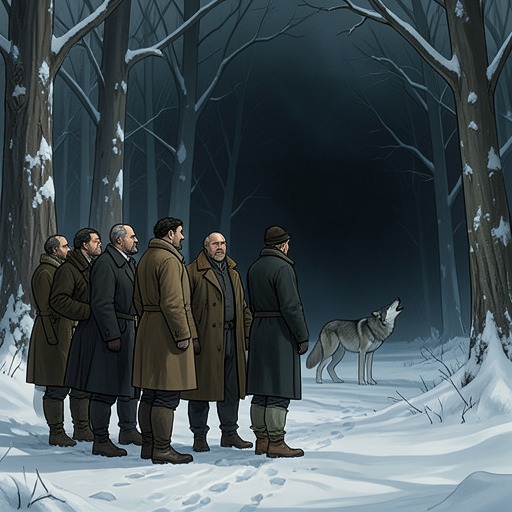
Craster’s keep is the first place Jon Snow expects to resemble a defended settlement on the far side of the Wall. Instead, it is a squalid compound: a midden heap, a pigsty, an empty sheepfold, and a long, low hall made of logs, daub, and sod. An earthen dike surrounds the rise, but rain has eaten holes through the defenses, sending brown rivulets down toward a brook swollen into a muddy torrent. The entrance is marked by animal skulls mounted on poles, one a bear and the other a ram, with flesh still clinging to the bear’s bones. The place is ill-suited to the large expedition that arrives there. Its hall can keep perhaps thirty or fifty men warm and dry, but cannot shelter the two hundred members of the ranging. Much of the company must remain outside in ankle-deep puddles and sucking mud. Even before Craster speaks, the setting establishes him as a figure of harsh adaptation rather than civilized order: his household survives in a landscape where rain, cold, scarcity, and isolation continually threaten to overwhelm human arrangements.
Appearance and Reputation
Craster sits above the fire in the only chair in the hall, while even Lord Commander Jeor Mormont must use a common bench. He wears a sheepskin jerkin and a cloak sewn from skins, garments that look shabby beside the heavy mail and wet leather of the Night’s Watch. A gold-colored ring circles one thick wrist, suggesting a residue of wealth or status amid the poverty of the keep. He is powerfully built but old, with hair turning from gray to white, a flat nose, a drooping mouth, and one missing ear. The Watch’s opinions of him are sharply divided. Thoren Smallwood calls him a friend to the Watch despite his unsavory reputation, explaining that Craster has never turned a ranger away from his fire and does not love Mance Rayder. Dywen’s judgment is far darker: he describes Craster as a kinslayer, liar, rapist, and coward, hints that he traffics with slavers and demons, and adds that there is a cold smell about him. These competing reports define Craster as a man whose practical usefulness has made his moral character difficult for the Watch to confront.
Hospitality and the Hidden Bargain
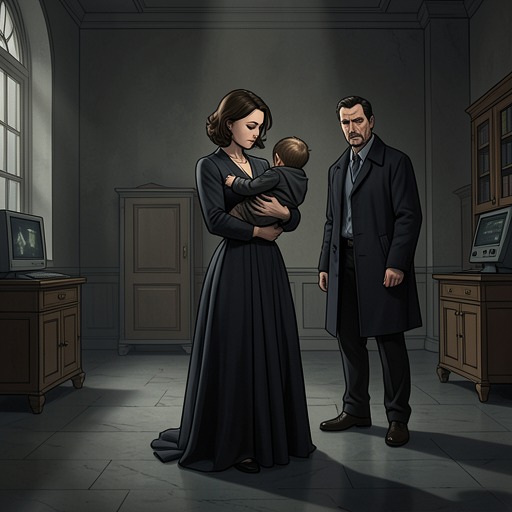
Craster’s hospitality is plainly limited but valuable. His keep provides a fire, a meal, and an opportunity to dry clothing after the Watch has passed seven empty villages. Jon Snow arrives exhausted by six days of rain, aching beneath his mail and weary of salt cod, salt beef, and hard cheese; the prospect of shelter makes even Craster’s company desirable. The household serves beer while women in ragged deerskins tend the fire and prepare vegetables, and the animals of the compound move among the benches as though the hall were simultaneously home, farm, and refuge. Yet the apparent welcome conceals a bargain with forces more terrible than hunger. Craster’s pregnant wife Gilly tells Jon Snow that he gives his sons to the gods when the white cold comes. He has had six boys, but none remain in the keep. As the cold has come more often, he has begun offering sheep despite his taste for mutton; once the sheep are gone, Gilly fears that dogs will be next. She is not chiefly afraid for herself. She fears for the unborn child in her belly, because Craster’s sons are surrendered while daughters are allowed to grow and may later become his wives. When Jon Snow asks which gods demand these offerings, Gilly names the cold gods: the white shadows in the night. Jeor Mormont confirms that all the rangers know of Craster’s practice, though few will discuss it. The Old Bear distinguishes the sacrifice from ordinary infanticide driven by famine. If Craster merely wished to rid himself of mouths, Mormont says, the Watch could take the boys and raise them to the black, strengthening its own ranks. Instead, these children are offerings, prayers made to powers that may be connected to the Others.
The Watch’s Complicity
Craster’s position exposes the Night’s Watch’s compromised moral authority. The brothers condemn him in private, but Mormont does not order his arrest or kill him. The Watch needs information, food, warmth, and a safe place to pause during a dangerous expedition, while Craster’s knowledge of the far North may help them understand the disappearance of Benjen Stark and the deserted settlements beyond the Wall. His usefulness turns abhorrence into tolerance. This arrangement is not presented as a stable alliance between equals. Craster retains dominance inside his hall, where he occupies the only chair and keeps control over the women, animals, food, and children around him. The Watch, for all its vows and martial purpose, enters his compound as a dependent guest. The result is an uneasy exchange: Craster offers limited shelter and perhaps counsel; the Watch allows him to continue the sacrifices that may purchase his safety from the cold gods.
Narrative Significance
Craster’s keep joins several recurring tensions in the northern story. It is a human settlement that survives by negotiating with inhuman danger, a place where hospitality and violence occupy the same room, and a threshold at which the Night’s Watch encounters evidence that the old tales may describe a present reality. The physical decay of the compound mirrors the ethical decay of its bargain: defenses dissolve in the rain, animals cry out like people, and the household’s future depends on children being removed before they can grow. The wider narrative repeatedly links the direwolves and dragons to knowledge beyond ordinary human understanding. Bran Stark’s wolf dreams suggest that the direwolves perceive grief and danger through a shared animal awareness; Grey Wind’s senses are credited with guiding Robb Stark around the Golden Tooth; Theon Greyjoy notices the absence of the direwolves’ howling as an ominous silence; and Summer and Shaggydog return through the burned ruins of Winterfell. Against that pattern of animals as sources of perception and power, Craster represents the human attempt to bargain with forces it cannot master. His sons are not merely victims of poverty but deliberate offerings, and the existence of such a ritual makes the threat beyond the Wall intimate, domestic, and immediate. Craster therefore functions less as a conventional ally than as a living warning. The Night’s Watch can cross his threshold, share his fire, and profit from his knowledge, but it cannot do so without entering the moral shadow cast by the cold gods. His keep is a shelter only in the narrowest sense: beneath its sod roof, the danger beyond the Wall has already been invited into the household.